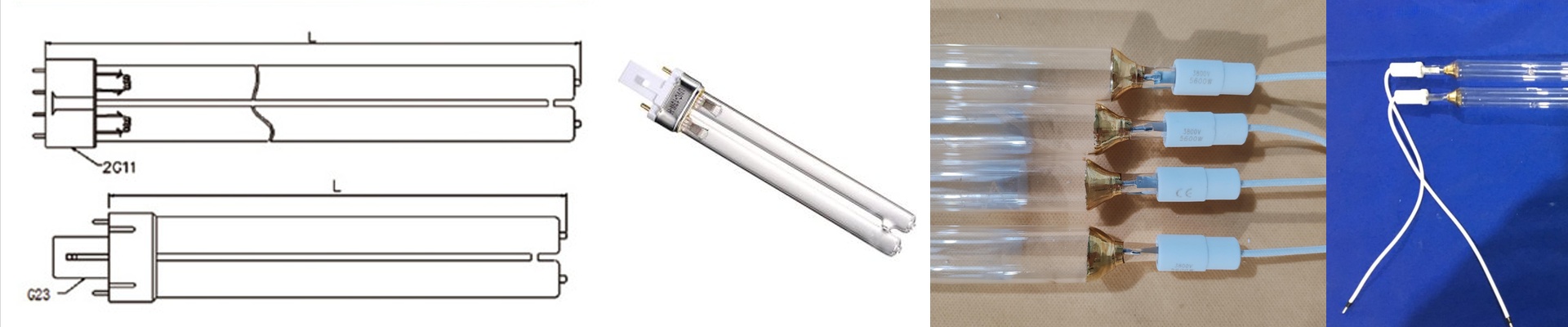
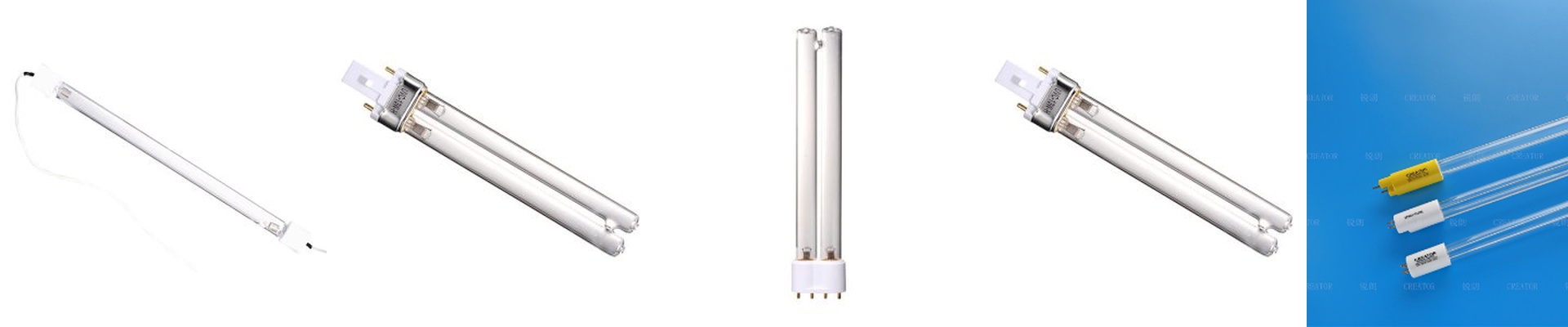
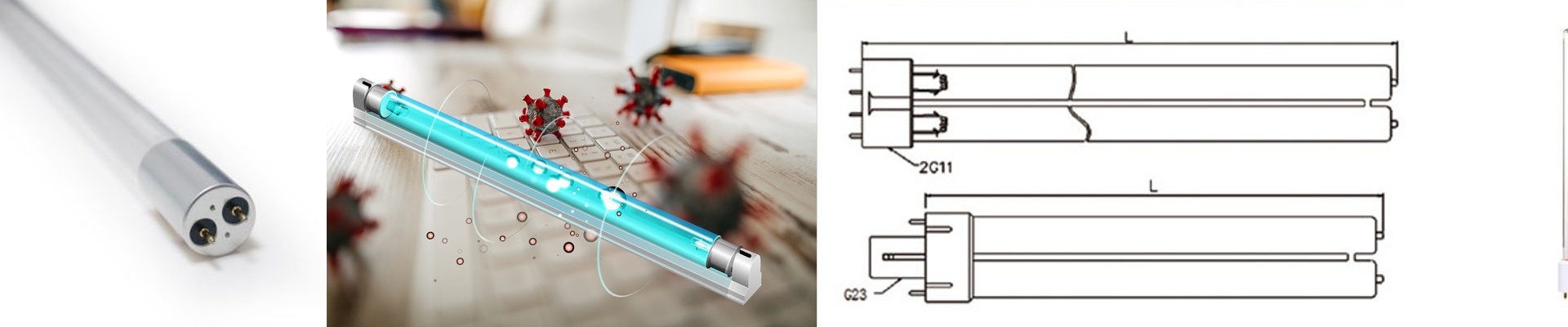
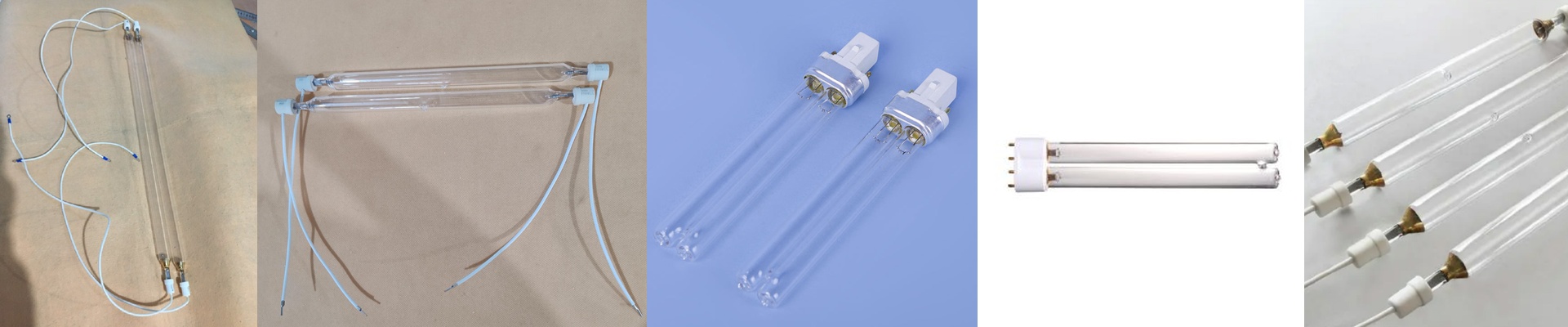
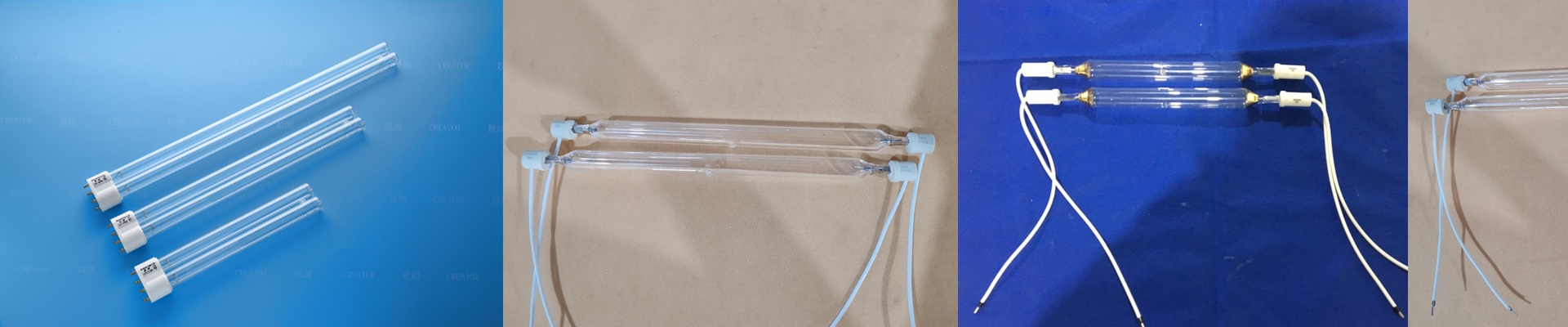
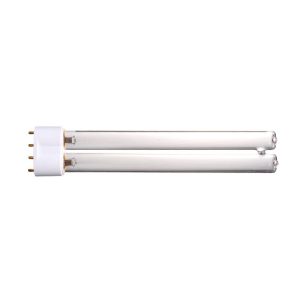
On the garment floor, the conveyor never stops. Ink goes down, and the clock starts—because the curing station either keeps the line moving or shuts it down. It’s not just about “light” anymore. It’s about matching the lamp’s spectral output to the photoinitiator chemistry in the ink, and hitting repeatable energy density across every square centimeter. Shortwave UV or LED? The answer comes down to what you’re curing, how fast you need to run, and what you can live with in heat, power, and maintenance. We see the same debate in front of every press: short-arc mercury vapor lamps with broad-spectrum output versus LED arrays with tight, peak wavelengths. Both have their place. But when the job is garment screen printing—thick, pigmented inks, heavy build—the physics of penetration and surface cure still lean toward a source that can deliver high peak irradiance and deep photon flux. That’s where cold cathode UV germicidal lamps, built for stable shortwave output, earn their keep.
What actually matters: wavelength, irradiance, and energy density
Cold cathode UV lamps are built differently than conventional hot cathode mercury vapor lamps. They ignite at lower currents, run cooler at the electrodes, and hold UV output steady with far less electrode erosion over time. In production curing, we live by three measurable realities: spectral output, peak irradiance, and delivered energy density.
- Spectral output and wavelength matching: The dominant emission line is 254 nm. That shortwave output is strongly absorbed by many photoinitiators and by the binder systems in thick, opaque inks. The payoff is rapid cross-linking through the full film—not just a skin cure. LED UV excels at 365 nm, 385 nm, or 405 nm, which is great for thin films and clear coats, but it doesn’t penetrate dense pigment layers as effectively. When your ink stack is thick, 254 nm drives cure where it counts—through the deposit.
- Peak irradiance and cure speed: Curing is a rate equation. Peak irradiance (W/cm²) at the substrate dictates how fast the photoinitiator reacts. Cold cathode systems can be set up to deliver high peak irradiance in a compact zone, so you can run higher line speeds without cooking the substrate. LED arrays deliver lower peak irradiance per unit area, so you either need a larger array or you slow the line to hit the same energy density. In practice, with chemistry matched to 254 nm, you get shorter dwell under a cold cathode lamp.
- Energy density and dose control: Dose is irradiance integrated over time—mJ/cm². We measure it with a spectral radiometer at the substrate plane, not at the lamp. Stable lamp output—kept consistent by arc current control and solid reflector geometry—gives you repeatable dose. Cold cathode lamps hold output longer between maintenance cycles because electrode wear is reduced, which flattens the output degradation curve. That stability is what keeps cure consistent, shift after shift.
- Thermal load and substrate sensitivity: Cotton, polyester, and blends don’t have unlimited heat tolerance. Cold cathode lamps run cooler at the electrodes, and when you pair them with proper reflectors and airflow, the heat budget stays manageable. LED UV is inherently cooler at the emitter, but the power supply and arrays still need heat management. The point isn’t “hot versus cold.” It’s total heat deposited into the substrate per unit time. With the right engineering, cold cathode systems deliver high photon flux while keeping thermal load under control.
- Ozone management: Shortwave UV at 254 nm can generate ozone when it hits atmospheric oxygen. Industrial cold cathode lamps built for curing use ozone-free quartz envelopes and reflector coatings to minimize ozone production and contain what little remains. The lamp housing has to be engineered to manage airflow and vent safely. That’s a design requirement, not an add-on.
Why shortwave UV fits garment printing
Garment screen printing pushes curing systems hard. Ink layers are thick, pigment loading is high, and throughput is relentless. The curing station has to handle flash-cure moments, full-cure dwell, and repeatable performance run after run. Here’s why cold cathode shortwave UV lamps make sense in that world.
- Penetration through thick ink films: Thick deposits need photons that reach through. 254 nm light is absorbed strongly, which drives cross-linking through the full thickness fast. LED wavelengths at 365 nm and longer struggle in dense pigments, often leaving the bottom undercured even after the surface loses tack. The result shows up as adhesion issues, wash fastness problems, and inconsistent hand feel.
- Faster line speeds when chemistry is matched: When the ink is formulated for 254 nm activation, the reaction rate is high. That means you can run the conveyor faster without giving up cure depth. In production, higher speed equals more parts per hour and lower unit cost.
- Stable output over long runs: Cold cathode electrodes see less sputtering, so spectral output stays stable and usable life stretches out. We’ve seen installations hold output within 5% of initial values past 5,000 hours, with routine cleaning and reflector maintenance. Stable output means stable dose, and stable dose means fewer rejects.
- Energy efficiency in duty cycles: Cold cathode lamps draw power based on arc current and can be dimmed to control dwell. In intermittent curing stations, the power supply can modulate output so you’re not wasting energy during idle gaps. LED systems are efficient at rated current, but they don’t scale down linearly in irradiance when you need lower dose; you either slow the line or add more LEDs.
- Retrofit-friendly integration: Cold cathode lamp systems can drop into existing UV curing stations without a major press redesign. They fit standard reflector geometries and mounting footprints. Retrofits are straightforward—often just a ballast and lamp swap, not a whole new curing module.
The practical details: installation, compatibility, and operating conditions
Cold cathode UV germicidal lamps are practical, but they’re not plug-and-play without planning. You have to match the lamp to the system, and the system to the process.
- Ballast and ignition compatibility: Cold cathode lamps need ballasts matched to their operating current and voltage profile. Don’t mix ballasts between hot and cold cathode lamps. Ignition voltage is different, and mismatched ballasts shorten lamp life and cause unstable output.
- Reflector and optical design: Peak irradiance at the substrate depends on reflector geometry and coating. A dichroic-coated elliptical reflector keeps shortwave energy focused on the substrate and cuts wasted heat. Poor reflector design wastes photons and heats the substrate unnecessarily. Measure irradiance at the substrate plane with a calibrated radiometer, then adjust height and reflector alignment to hit your target dose.
- Power supply and duty cycle: Cold cathode lamps are current-driven. The power supply has to regulate arc current tightly to keep irradiance stable. If your curing station cycles on and off frequently, make sure the power supply can handle the thermal stress without output drift.
- Ozone control and ventilation: Even with ozone-free lamp designs, the housing must be vented. Provide positive exhaust to pull any trace ozone away from operators and substrates, and use ozone-safe materials in the airflow path. This isn’t optional—it’s safety and compliance.
- Lamp life and maintenance: Cold cathode lamps outlast hot cathode in many duty cycles, but they still degrade. Plan for periodic cleaning and output verification. Track dose at the substrate across shifts. When output falls below your process window, replace the lamp. Keep a spare on hand so the press doesn’t sit idle.
- Substrate and ink chemistry matching: Not every ink is built for 254 nm. Test your ink for depth of cure and surface cure at your line speed. Measure gel time, pencil hardness, and wash fastness after curing. If your ink supplier formulates for LED wavelengths, a shortwave lamp won’t do the job. The light source has to match the photoinitiator.
- Thermal management of the substrate: Cold cathode lamps run cooler at the electrodes, but the photon flux still puts energy into the ink and substrate. Monitor substrate temperature with an infrared sensor. If you see heat-related defects—shrinkage, scorching, adhesion loss—adjust lamp height, airflow, and duty cycle. Sometimes the fix is as simple as increasing airflow across the substrate before it hits the curing zone. LED UV dominates when thin films, low heat, and long life are the primary drivers. Shortwave UV from cold cathode germicidal lamps engineered for industrial curing dominates when you need thick films, pigmented inks, and deep cross-linking. The right choice is the one that lines up with your ink chemistry, press speed, and quality metrics. If your line needs consistent dose at high speed through thick ink layers, cold cathode shortwave UV delivers the penetration, irradiance, and stability to hit that target. Measure the output. Match the chemistry. Run the numbers. That’s how curing becomes repeatable, not guesswork.